






 Back to blog
By Lizza Gallardo Santander ·
Tires: the component that seeks to turn machinery power into greater productivity
The growth of farming operations and the rising number of kilometers covered by fleets make it increasingly important to have tires capable of responding to different working conditions. Xbri stresses that price is no longer the only deciding factor, and that performance, service life, safety, support and availability now carry more weight.
When it comes to technology applied to agriculture, the conversation usually centers on drones, sensors and artificial intelligence. For Rebeca Yolanda Ríos, Xbri's Regional Sales Manager, however, there is another essential component that determines whether all that technology can translate into productivity: the tire.
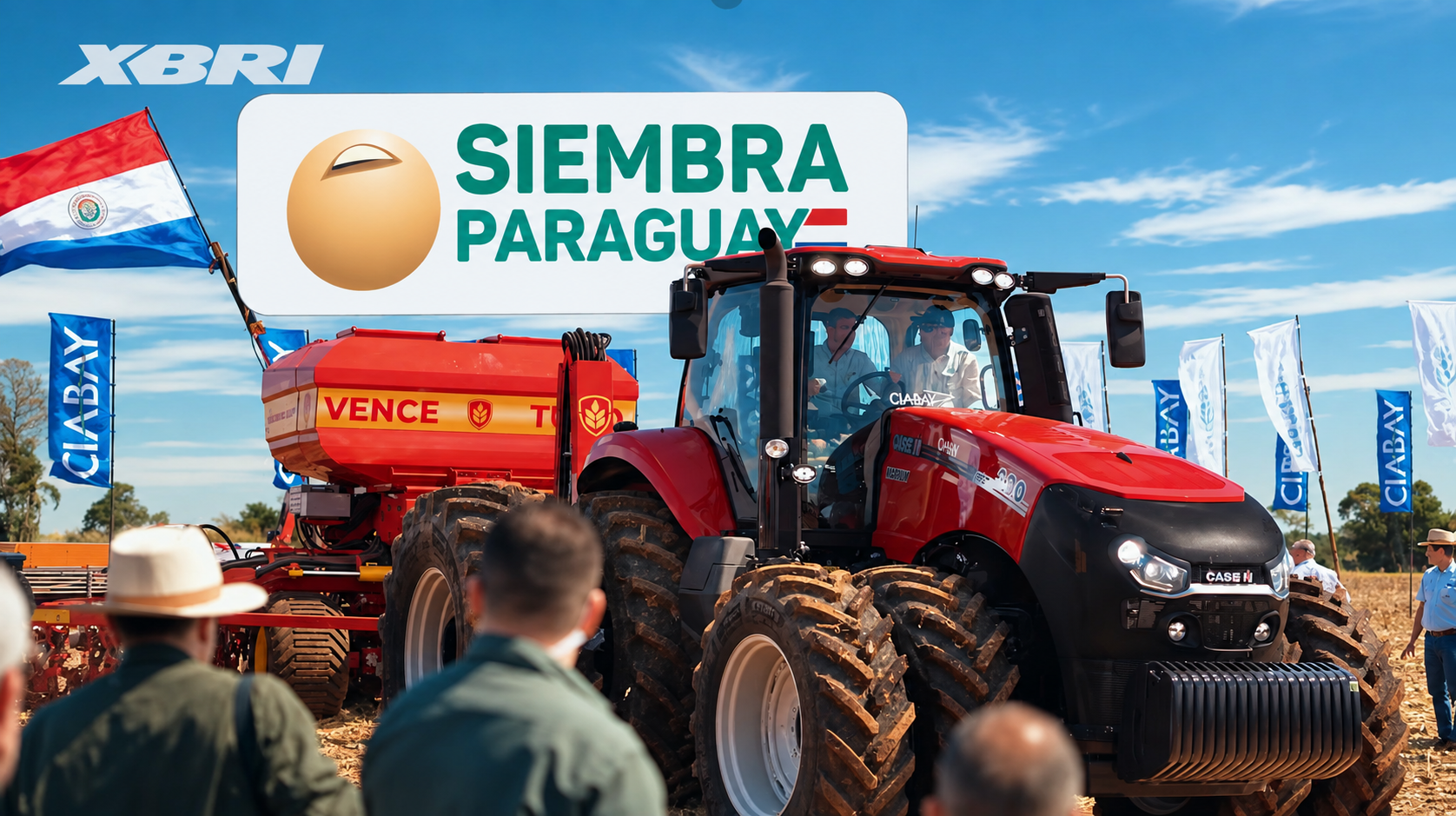
Speaking at the Forbes Paraguay Campo Summit, the executive explained that mobility, efficiency and continuity are central to field operations, since machines can incorporate all kinds of technology but still need to transmit their full power to the ground. At that point, she said, the tire directly affects aspects such as service life, performance and the reduction of operational downtime.
Ríos argued that choosing a specialized solution is no longer a decision tied solely to the product, since it is also directly related to the productivity of operations. In that sense, she noted that the growing dynamism of agricultural production and the rising mileage of freight transport and fleets create an ever greater need to control operating costs.
“We know that agriculture needs mobility, efficiency and continuity,” the executive said, explaining the role tires play across different operations. In her view, the decision about which product to use must consider the specific characteristics of the work the machine will perform.
In this context, the technology applied to tire development also becomes relevant. Ríos mentioned that products incorporate new compounds and designs aimed at different types of operations, while access to information allows customers to identify which alternative they need for each job.
The executive explained that Xbri also seeks to make that process easier through information available on its website, where customers can identify solutions according to their needs and then access specialist guidance and the corresponding service.
When choosing a tire, price remains an important factor, but Ríos said it is no longer the only decisive element. As she explained, cost loses relevance when the product fails to deliver safety, service life or the performance expected for the operation.
“Price matters, but it loses its meaning when a product fails to deliver safety or service life,” she said. In that sense, she stressed that differentiation comes from offering a product that meets the demands of each job, backed by warranty and responsiveness.
Sustainability was another of the aspects the executive addressed. Ríos explained that Xbri works on making the most of materials throughout the product life cycle, and that this strategy also includes actions linked to recycling.
Between 2023 and 2025, she noted, the company sent more than 1,300 tons of tires for recycling. This use of materials, she said, made it possible to avoid waste and represented approximately 2,000 tons of CO₂ equivalent, as part of the actions tied to its social responsibility.
Ríos also linked these initiatives to the United Nations Sustainable Development Goals, mainly those related to health, sustainable cities and communities, climate action and partnerships.
In a market where numerous tire brands coexist, origin is no longer the main selection criterion, according to the executive. Today, she explained, customers pay greater attention to technical specifications, performance, support and the service experience.
Against that backdrop, Xbri seeks to differentiate itself through a broad product portfolio, availability, technical knowledge, quality certifications, infrastructure, logistics and service. Ríos maintained that the proposal aims to build a relationship between quality and durability, beyond competing on price alone.
The experience accumulated across different markets is also part of this strategy. The executive mentioned that the brand's presence in more than 30 countries allowed it to learn about diverse conditions and develop a regional perspective for serving different climates, operations and surfaces.
That scale, she said, also translates into greater planning capacity and availability to respond to customers' needs. In particular, she highlighted the importance of having products geared toward operations that demand greater resistance and continuity.
Another of the points Ríos highlighted was the industrial project Xbri plans to develop in Brazil. The initiative, she explained, seeks to strengthen production capacity for South America, improve product availability and bring the operation closer to the region's markets.
As she detailed, the production forecast contemplates reaching 12 million tires, five million of which will be destined for the transport segment. For the executive, this increase will improve availability and, at the same time, raise regional responsiveness.
Looking to the coming years, Ríos said Xbri's strategy will be tied to expanding its capabilities in technology, infrastructure, innovation and service. She stated that this process involves broadening availability, strengthening knowledge and offering products developed according to the characteristics of each operation.
The executive finally remarked that the goal is to support the needs of growers and distributors with solutions that help maintain the continuity, efficiency and safety of operations, with a long-term outlook.
You can read the full article on Forbes Paraguay and watch the interview on YouTube.