 Español
 Português
 English
 My account
 My orders
 Your wishlist
 Your cart
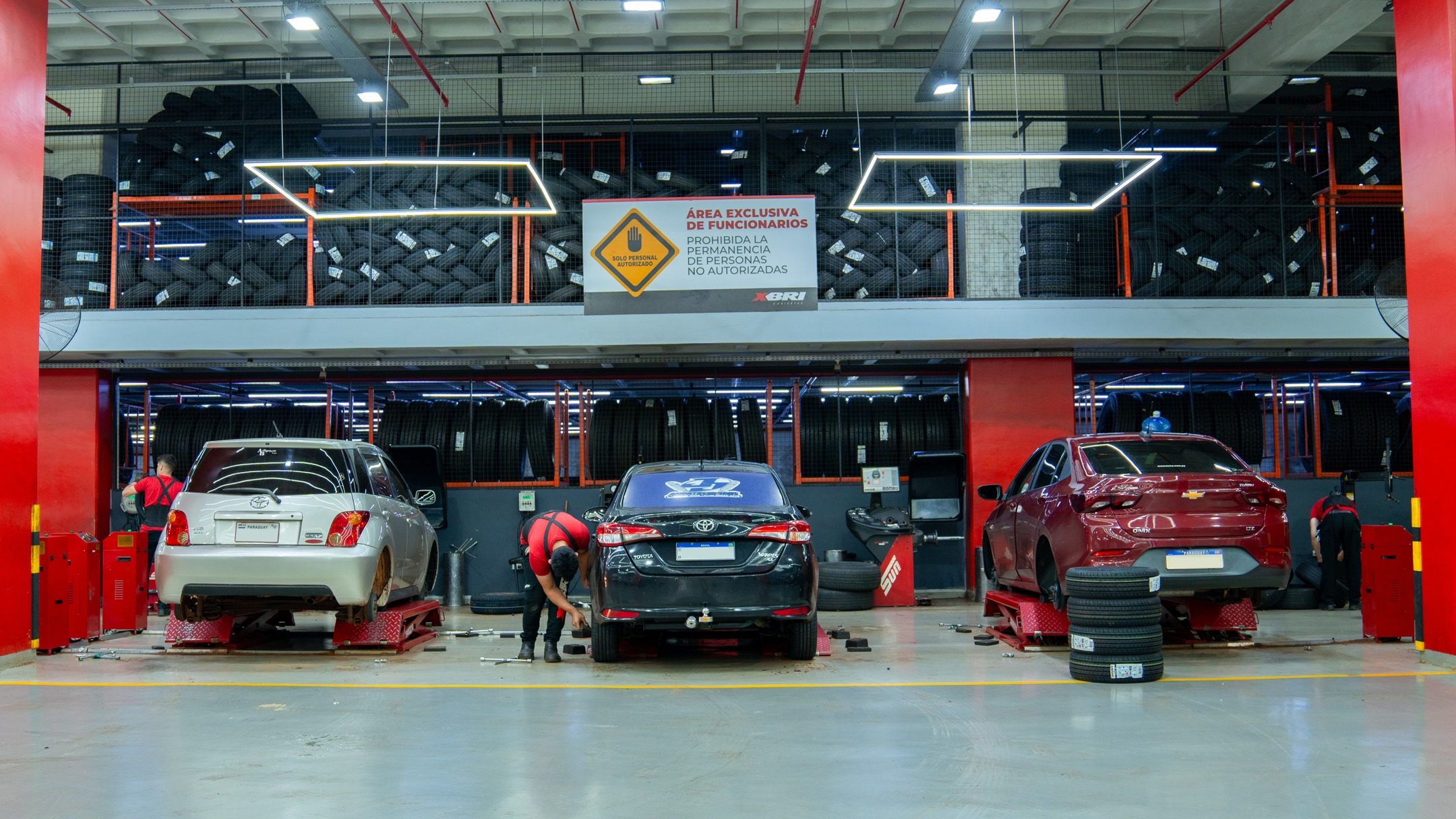
XBRI Tire Shop & Auto Center — Automotive Services
Our branches don't just sell tires: each one is also a tire shop and automotive service center.
Our services
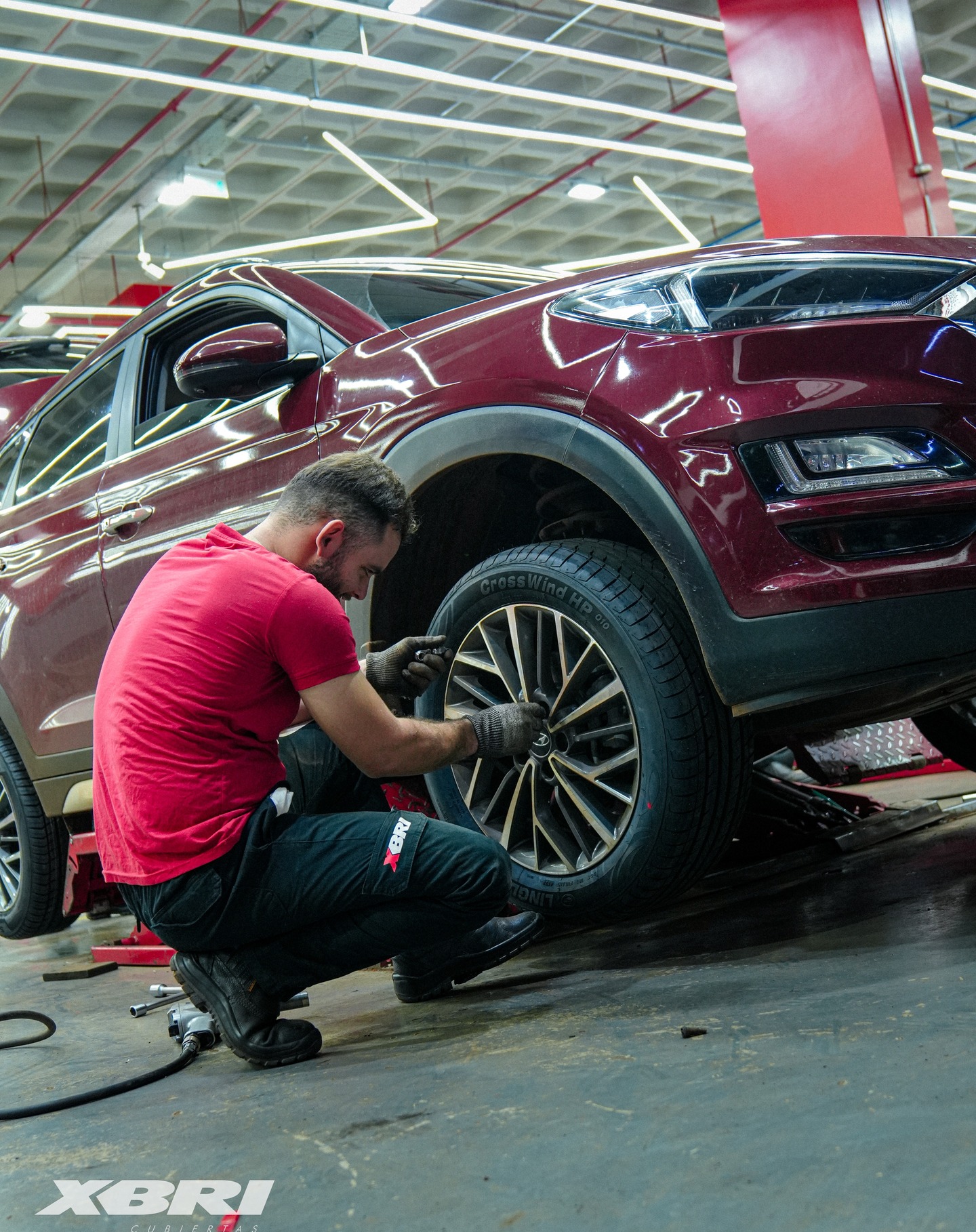
Mounting
Removing the old tire and mounting the new one on the wheel.
The worn tire is removed, the new one is mounted on the wheel, and it's inflated to the pressure specified by the vehicle manufacturer. The job includes properly seating the bead on the wheel and, for directional or asymmetric tires, respecting the rotation direction marked on the sidewall.
A directional tread mounted backwards loses its ability to channel water away, and a poorly seated bead shows up as vibration that no balancing will fix.

Balancing
Evens out the weight distribution of the wheel-and-tire assembly.
A wheel-and-tire assembly is never perfectly evenly weighted. At highway speed, that imbalance turns into vibration. Balancing measures where the excess mass is and offsets it with weights on the wheel.
It shows up as vibration in the steering wheel between 80 and 120 km/h, or as a shudder in the seat when the imbalance is in the rear wheels. It should be done with every tire change and whenever a weight is lost.
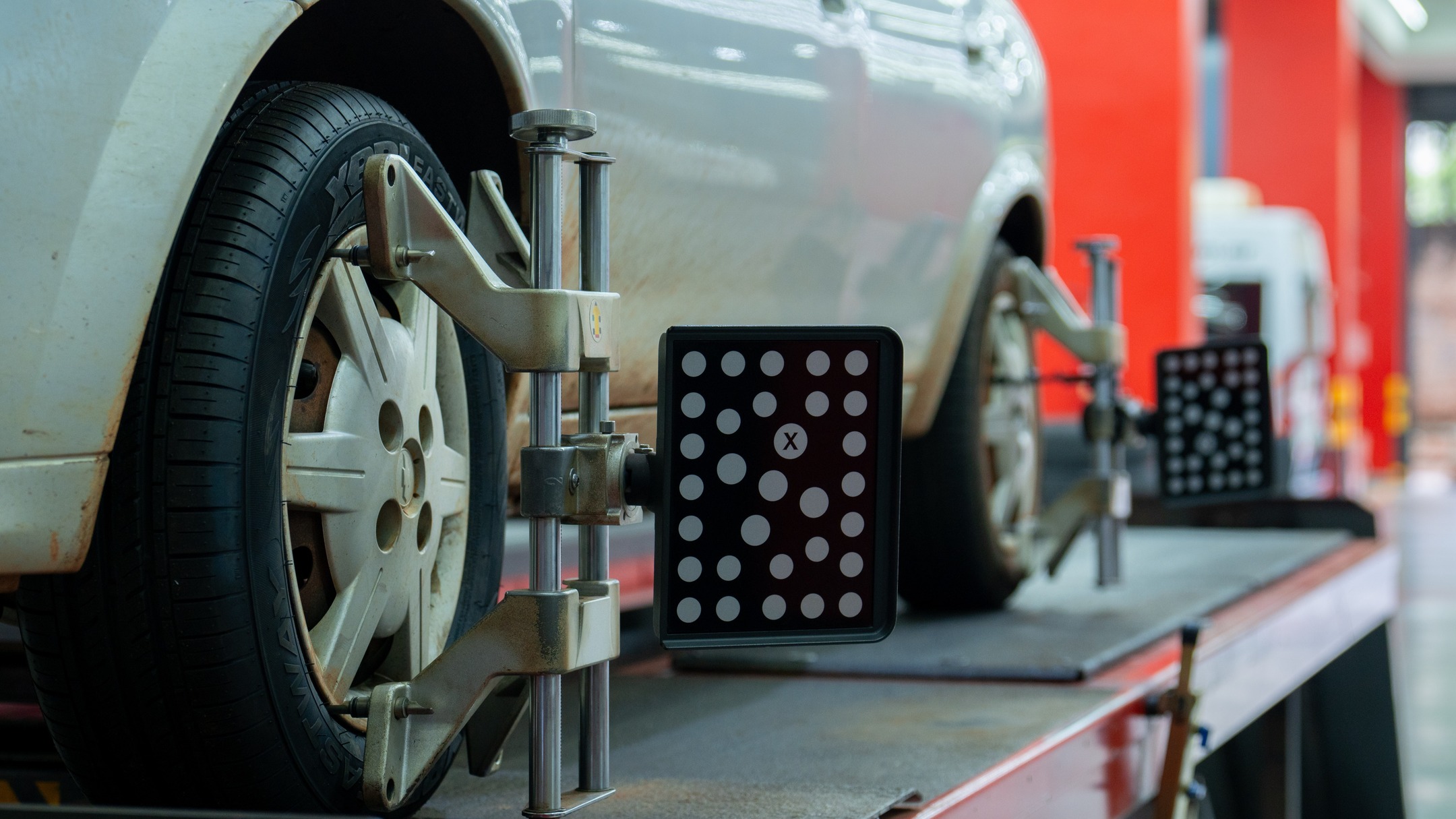
Alignment
Adjusts the suspension angles: toe, camber and caster.
Aligning means correcting the three angles at which the wheel meets the road: toe, camber and caster. When any of them falls out of spec, the tire stops sitting evenly and wears on one side, even if pressure and balancing are correct.
The car pulls to one side, the steering wheel sits crooked with the wheels straight, or a tire wears only on the inner or outer shoulder. It's needed with every tire change or suspension work, and every 6 months or 10,000 km.
See the full suspension geometry guide

Tread correction
Evens out a tread surface that wore unevenly.
When a tire wears unevenly —in steps, wavy, or more worn on one shoulder— the contact surface becomes irregular and creates noise and vibration that balancing won't fix. Tread correction shaves down the tread until it's even again.
Road noise that gets louder with speed, vibration that persists after balancing, or a stepped feel when you run your hand over the tread. It's best to fix the cause —alignment or pressure— along with the tread, or the wear comes back.
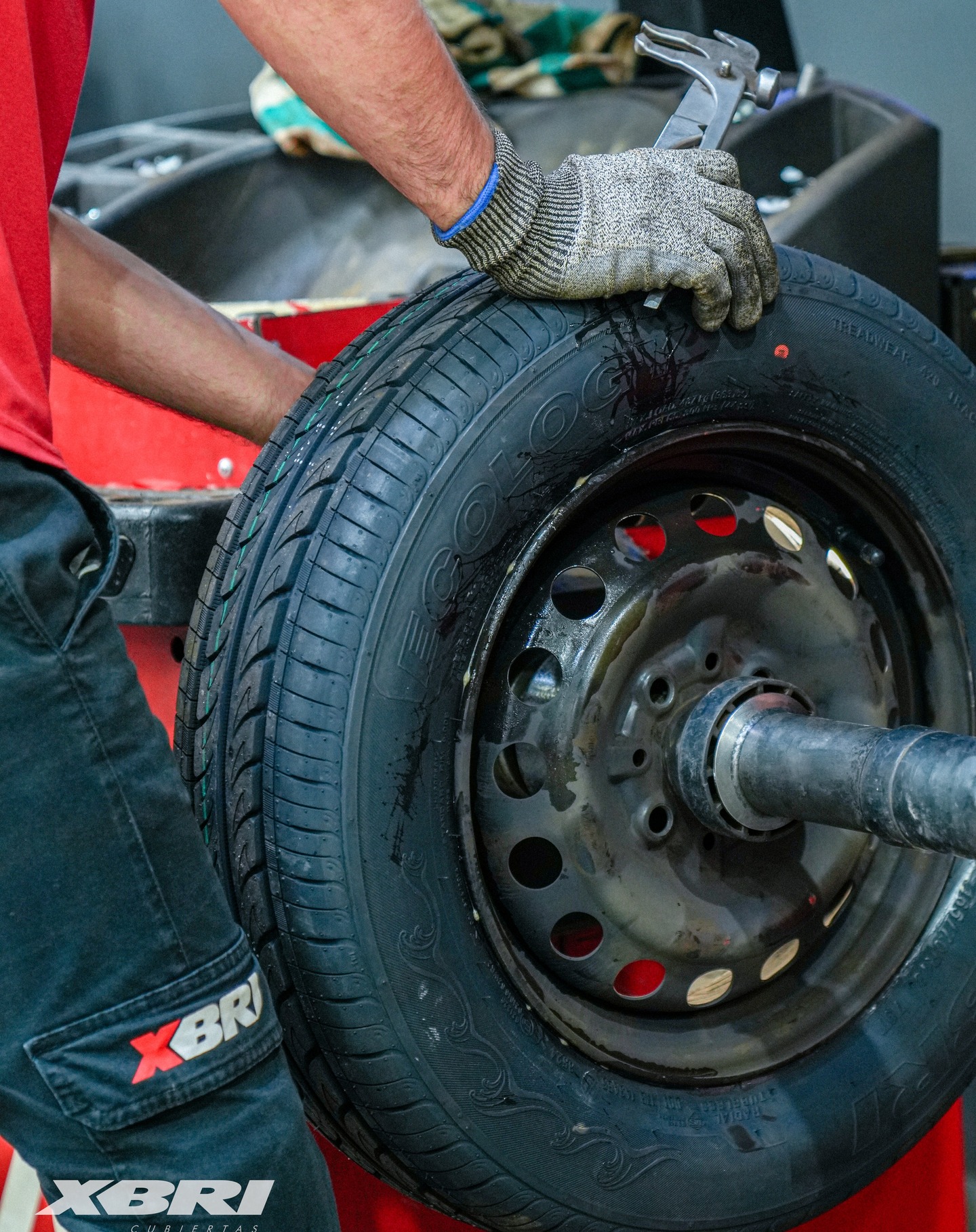
Rotation
Moves the tires to different positions so wear spreads evenly.
The tires on the same vehicle don't wear at the same rate: on front-wheel drive, the front tires carry the power and steering, and wear out well before the rear ones. Rotating means moving them to different positions so wear spreads out and all four reach the end of their life together.
Every 10,000 km is a reasonable interval. It's the cheapest service at the auto center, and the one that adds the most mileage to a full set.
Valve stem replacement
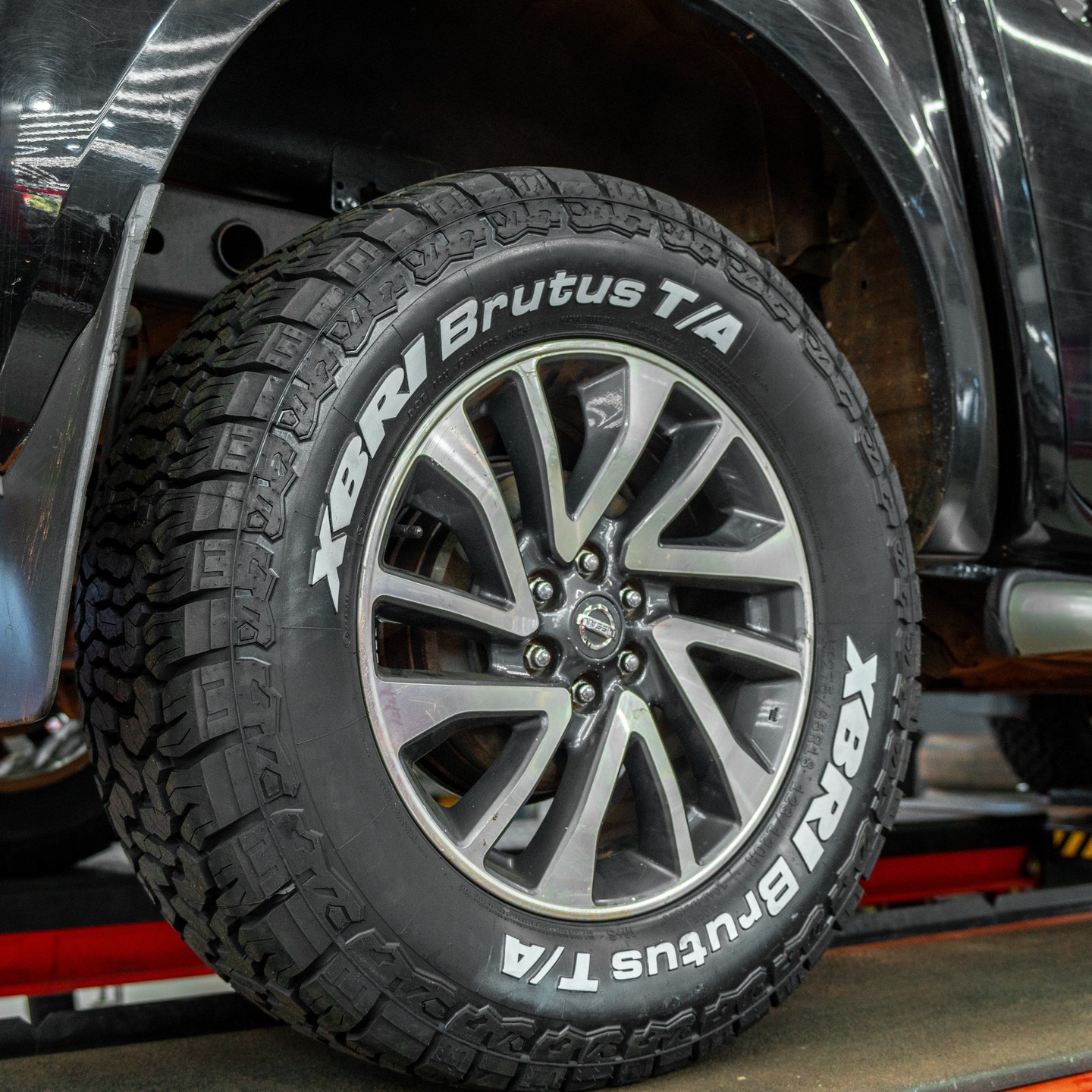
Replacing the inflation valve with a new TR414.
The valve you inflate the tire through is made of rubber, and rubber hardens with heat and ozone until it cracks at the base. A cracked valve leaks pressure slowly, with no visible puncture. We use the TR414, the standard rubber valve for car and light-truck wheels.
If a tire keeps losing air and no puncture turns up, the valve is the first suspect. It should be replaced with every tire change — it's the cheapest part in the assembly and the one that leaves you stranded most often.
Frequently asked questions about the auto center
Are alignment and balancing the same thing?
No, and they fix different problems. Balancing compensates for uneven weight in the wheel-and-tire assembly, and targets vibration. Alignment corrects the angles at which the wheel meets the road, and targets uneven wear and a car that pulls to one side. A vehicle may need one, the other, or both.
How often should you get an alignment?
With every tire change or suspension work, plus every 6 months or 10,000 km. Also after a hard hit against a curb or a pothole — that alone is enough to knock the toe out of spec.
What is tread correction?
It's shaving down the tread of a tire that wore unevenly, until the contact surface is even again. It's done when uneven wear causes noise or vibration that balancing doesn't fix. The price depends on how bad the wear is, so it's quoted after inspecting the tire.
Why does the steering wheel vibrate on the highway if the tires are new?
The three most common causes: it needs balancing, a weight came off, or the tire's bead didn't seat properly on the wheel. All three get checked at the auto center. If the vibration persists after balancing, the next step is checking the tread.
Which branches have an auto center?
At most of our branches. Every branch works as a sales point, and most also as an automotive service center — the address and directions for each one are further down this page.
Branches with an Auto Center
XBRI Cubiertas branches in Ciudad del Este, Ypané, and Asunción: addresses, hours and auto center service.
- Get directions
Headquarters · Auto center
Av. San Blas Km. 1 - Ciudad del EsteMonday to Friday: 06:00 to 18:00
Saturdays: 06:00 to 15:00
- Get directions
Branch · Auto center
Ruta PY 01 - YpanéMonday to Friday: 07:00 to 18:00
Saturdays: 07:00 to 13:00
- Get directions
Branch · Auto center
Eusebio Ayala y Cedro - AsunciónMonday to Friday: 07:00 to 18:00
Saturdays: 07:00 to 13:00

Headquarters
Ciudad del Este
Branches with an Auto Center
XBRI Cubiertas branches in Ciudad del Este, Ypané, and Asunción: addresses, hours and auto center service.
Swipe to see all branches
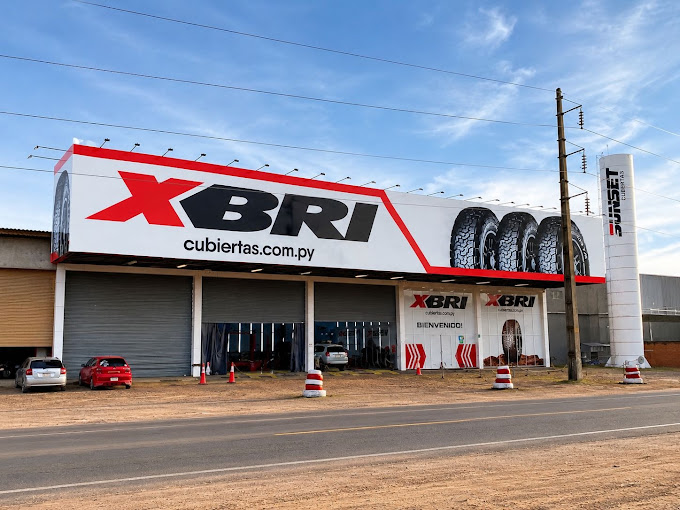
- Headquarters · Auto centerGet directions
Ciudad del Este
Address
Av. San Blas Km. 1 - Ciudad del EsteHours
Monday to Friday: 06:00 to 18:00
Saturdays: 06:00 to 15:00
 Branch · Auto centerGet directions
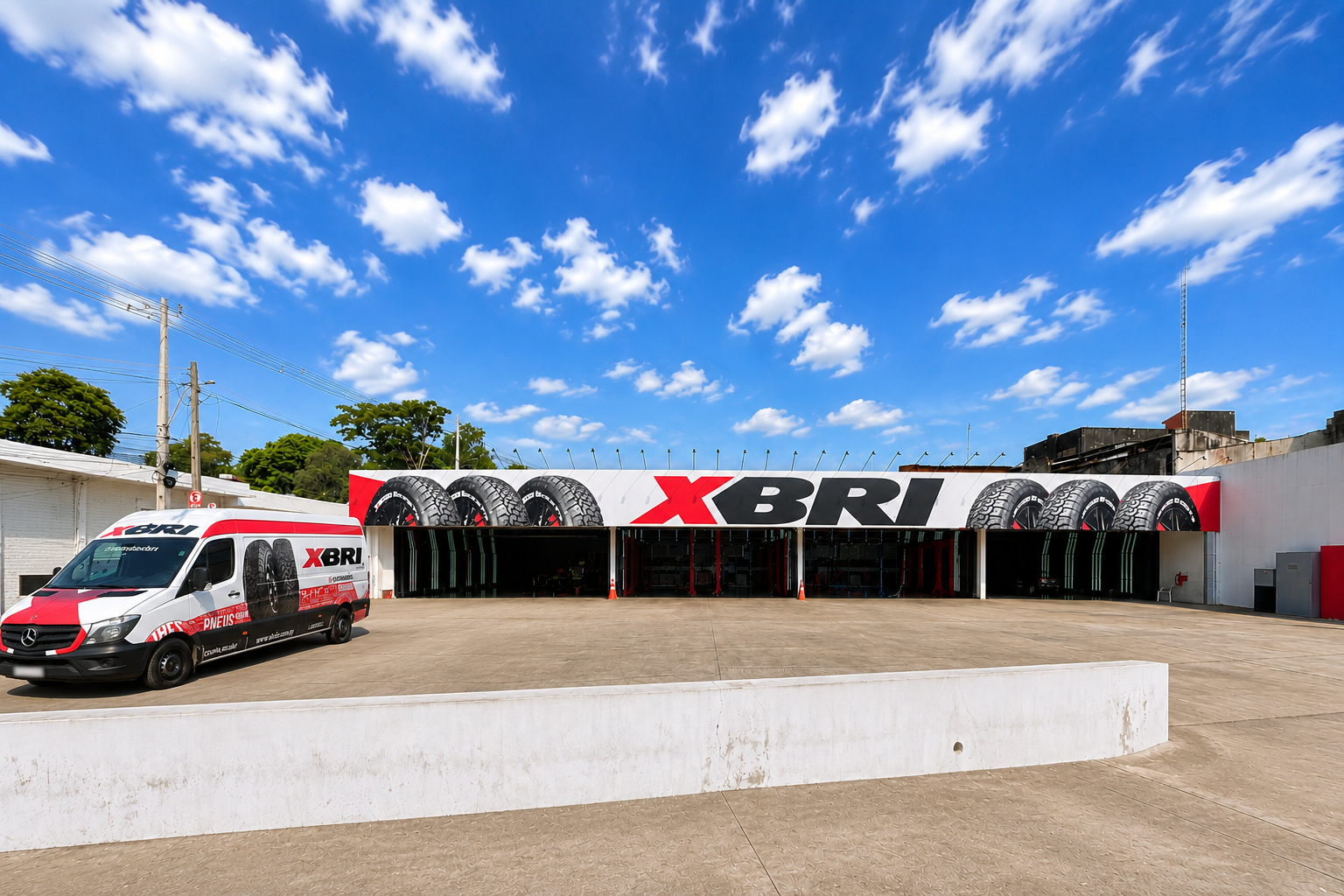
Ypané
Address
Ruta PY 01 - YpanéHours
Monday to Friday: 07:00 to 18:00
Saturdays: 07:00 to 13:00
 Branch · Auto centerGet directions
Asunción
Address
Eusebio Ayala y Cedro - AsunciónHours
Monday to Friday: 07:00 to 18:00
Saturdays: 07:00 to 13:00